

The Federal Government has cancelled $717.7 million in undisbursed World Bank intervention funds meant to support Nigeria’s troubled electricity sector, effectively ending a major part of the country’s power sector recovery programme.
The decision followed a formal request by the Federal Government and a mutual agreement with the World Bank to discontinue financing under the Power Sector Recovery Performance-Based Operation due to changing realities in the sector and the failure to meet critical reform targets.
Documents obtained from the World Bank showed that the cancellation affects the remaining balance of a $1.52 billion power sector recovery initiative designed to improve electricity supply, strengthen financial sustainability and enhance accountability across the electricity value chain.
“The restructuring will result in the cancellation of the entire undisbursed balance in the amount of $717.7m equivalent, and no further disbursements will be made under the programme,” the World Bank stated. The Power Sector Recovery Programme was introduced by the Federal Government to restore financial stability in the electricity sector, reduce fiscal pressures on public finances and improve operational efficiency among power sector institutions.
The initial loan package of about $752.5 million was approved on June 23, 2020, while an additional financing facility of approximately $763.5 million was approved on June 9, 2023, to deepen ongoing reforms and consolidate earlier achievements.
Combined, both facilities amounted to about $1.52 billion. Although the parent programme reportedly achieved significant milestones and disbursed most of its funds, the additional financing arrangement suffered major setbacks due to failure to meet key reform conditions.
According to the World Bank, Nigeria’s electricity sector continues to struggle with deep structural problems, including weak distribution networks, transmission bottlenecks, poor revenue collection and persistent financial imbalances.
The bank noted that high technical and commercial losses, coupled with inadequate cost recovery, have continued to create major funding gaps within the sector. It stated that while tariff shortfalls dropped by 71 per cent between 2019 and 2022, falling from N581 billion to N166 billion, the gains were later reversed following worsening macroeconomic conditions.
The World Bank explained that the liberalisation of Nigeria’s foreign exchange market in June 2023 triggered a sharp depreciation of the naira, significantly increasing the cost of natural gas used for electricity generation. According to the report, over 70 per cent of electricity supplied to the national grid is generated using gas priced in United States dollars.
At the same time, electricity tariffs remained largely unchanged for most consumers despite rising generation costs, except for Band A customers whose tariffs were adjusted in April 2024. The widening gap between electricity production costs and revenues pushed tariff shortfalls from N140 billion in 2022 to about N1.9 trillion annually in 2024 and 2025.
The World Bank said the deteriorating financial situation made it impossible for Nigeria to achieve major performance indicators tied to the additional financing package. It added that recent financing plans failed to identify sustainable funding sources capable of addressing tariff shortfalls or establishing a credible path for reducing the deficits.
Implementation delays also contributed to the programme’s failure, especially issues involving the Transmission Company of Nigeria and verification requirements for sector institutions. Financial records showed that under the International Bank for Reconstruction and Development component, only $41.24 million was disbursed out of a committed $449 million, leaving more than $407 million undisbursed.
The bank disclosed that while about 95 per cent of the original programme funds were successfully disbursed, only around nine per cent of the additional financing package was released. The World Bank concluded that the programme’s design had become inconsistent with prevailing realities in Nigeria’s electricity sector, noting that achieving the intended reforms required coordinated fiscal, policy and operational progress that proved difficult within the timeframe.
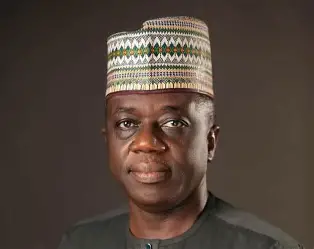
Consequently, the programme’s closing date was moved forward from June 30, 2027, to May 31, 2026. The development comes shortly after the Accountant-General of the Federation, Dr Shamseldeen Ogunjimi, warned that Nigeria could reject future World Bank loan facilities if delays in approvals and disbursements continue.
Speaking during a meeting with a World Bank delegation in Abuja, Ogunjimi stressed that Nigeria expects timely processing of loan requests since the facilities are repayable and tied to national development plans. “If approvals take more than six months, the Nigerian Government may no longer honour such arrangements,” he warned. He urged the World Bank to speed up approval and disbursement processes to avoid disruptions to critical government projects and development objectives.