

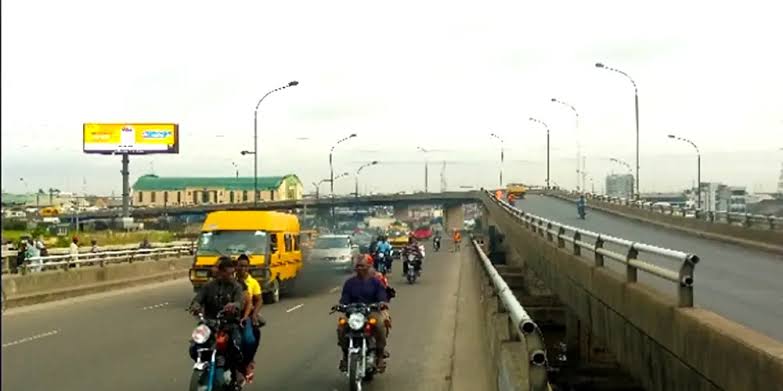
The Federal Government has urged drivers, particularly those operating articulated trucks, to be mindful of upcoming diversion signs as height restriction barriers are set to be installed on the Iddo Bridge.
Mrs. Olukorede Kesha, the Federal Controller of Works in Lagos, these restrictions are essential to facilitate.
She said, “I am using this medium to appeal to all the motoring public, especially the articulated trucks that have any business to do with the Iddo Bridge, coming from Apapa to Oyingbo, coming from Apapa to Carter Bridge, coming from Carter Bridge to ijora.
“If you are coming from Oyingbo and you are going to Ijora, you will use this Iddo Bridge that we are talking about.
“I am using this medium to appeal to drivers driving articulated trucks because they are the ones who are mostly affected by this announcement. That, very soon, in a couple of days, we are going to reinstall a barrier.
“We installed the barriers before. Due to some issues, we uninstalled them, and then we are planning to reinstall them, but we want to make the advocacy to go round and give drivers the ample time to absorb it before we now install the barrier again.’’
The controller of works added that trucks higher than three metres would be unable to cross the bridge once the height restriction barriers are in place.
“So, we are appealing to drivers that once you approach these junctions, please slow down and look out for the diversion that is in place that will guide you to the next place that you can exit from and then continue your journey.
“Or, watch out for the traffic personnel that have been deployed to manage traffic during these periods,’’ she said.
Olukorede Kesha noted that the initial stage will involve restrictions on heavy vehicles, with limitations eventually extending to light vehicles as well.
The primary objective of these restrictions is to facilitate the repair of the 550-meter bridge, which has been found to have defects in several spans.
The rehabilitation process of the Iddo bridge is expected to take approximately six months, as it will entail breaking down and recasting the three major defective spans.
The government has emphasized the importance of public cooperation and patience during the repair period, as the long-term benefits of a safer and more efficient bridge will ultimately improve public service.
The first phase of vehicular restrictions was in the Iddi bridge was implemented on February 2, following a structural evaluation that revealed the bridge’s pressing need for repairs.


