
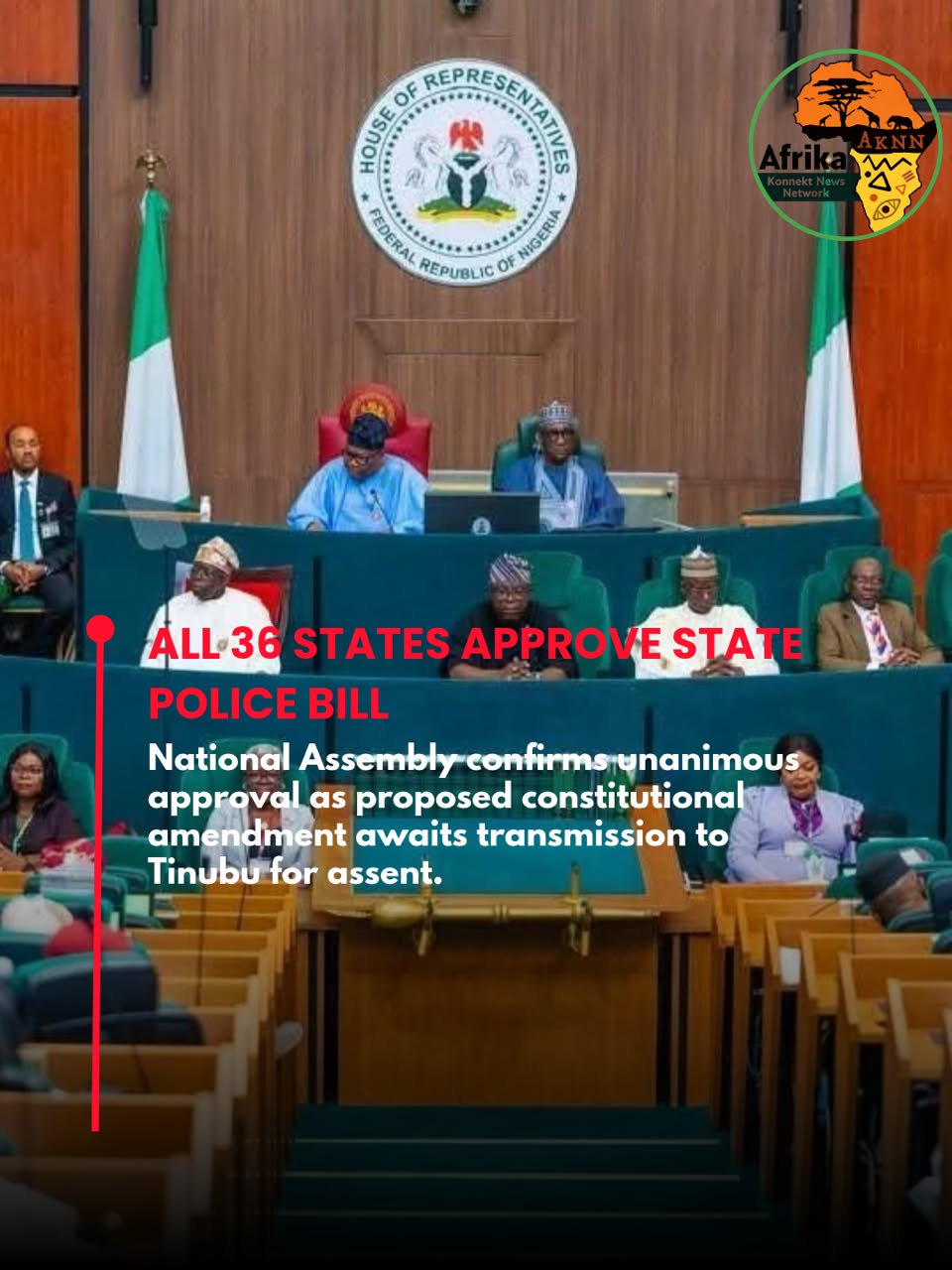

Nigeria has moved a step closer to establishing state police following reports that all 36 State Houses of Assembly have approved a proposed constitutional amendment aimed at decentralising the country’s policing system.
The development represents a major milestone in one of the most significant governance and security reforms under consideration in recent years, reflecting growing consensus among states on the need to strengthen local security structures and improve responses to evolving threats across the federation.
For decades, calls for state police have dominated national conversations on security reform, with advocates arguing that a decentralised policing framework would enable faster intelligence gathering, improved community engagement, and more effective responses to crime and insecurity at the grassroots level.
Nigeria moves closer to introducing state police after all 36 State Houses of Assembly reportedly approved a constitutional amendment backing the reform, a development widely seen as a major step toward decentralising policing and strengthening the country’s security framework.
The reported approval by the state legislatures signals broad support for constitutional changes that would allow states to establish and manage their own police formations while operating within safeguards established by law.
Supporters of the initiative believe state police could help address persistent security challenges, including banditry, kidnapping, communal conflicts, and other violent crimes by empowering subnational governments to take greater responsibility for the protection of lives and property within their jurisdictions.
However, the proposal has also generated debate, with critics expressing concerns about potential abuse of state-controlled security agencies and the need for strong oversight mechanisms to prevent political interference.
With the endorsement of all 36 State Houses of Assembly, the proposed amendment is expected to advance to the next phase of the constitutional review process, bringing Nigeria closer than ever to a fundamental restructuring of its policing architecture.
If eventually enacted, the reform would mark a historic shift from the country’s long-standing centralized policing system and could redefine the relationship between federal and state authorities in matters of internal security.
Stakeholders across government, civil society, and the security sector are expected to closely monitor the remaining constitutional procedures as momentum builds toward what could become one of the most consequential security reforms in Nigeria’s democratic history.